
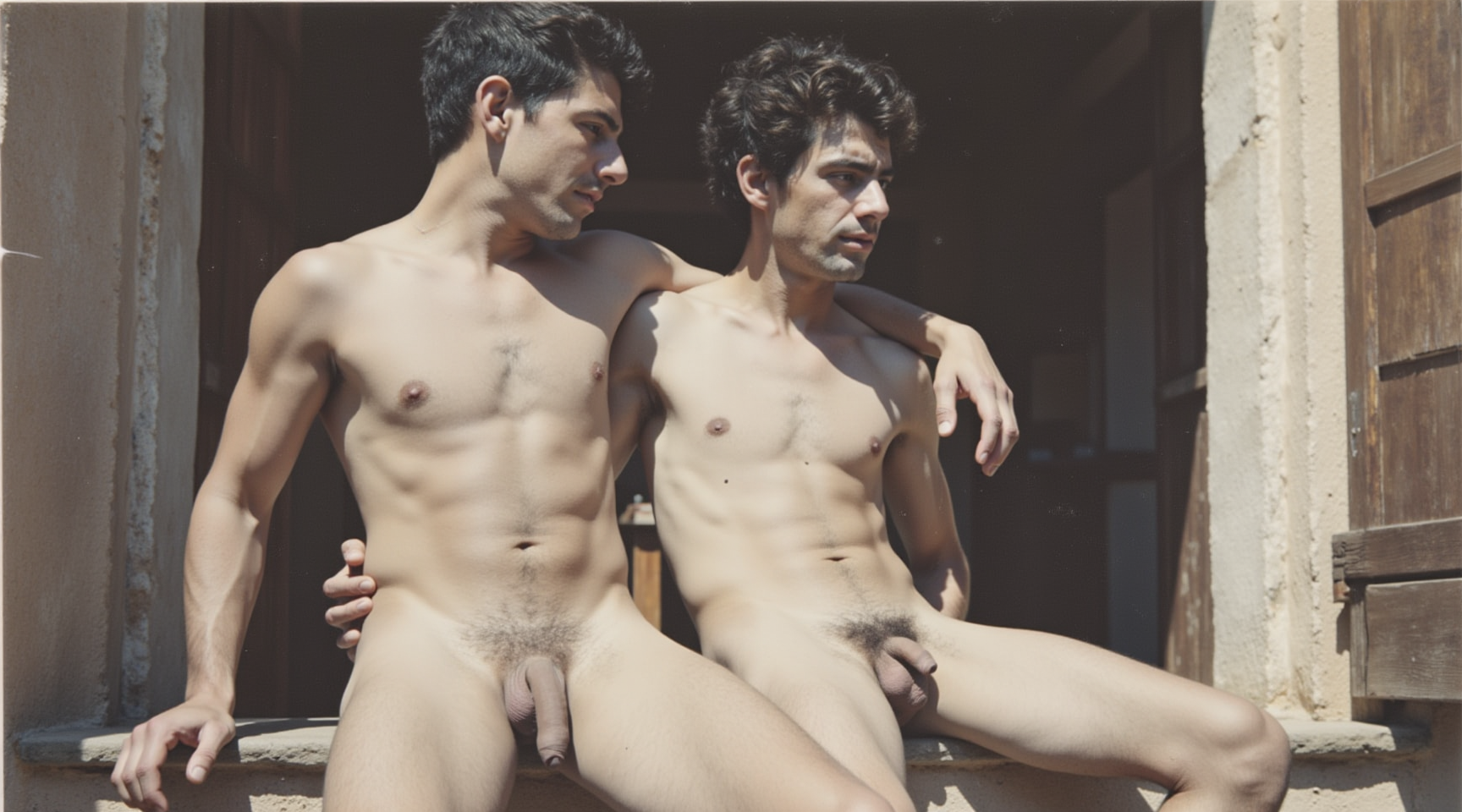
The Getty Museum just did something pretty significant. They acquired an AI-generated photograph. I’ve been following AI art for a while now, and this feels like one of those moments when things actually shift1. Thanks to finding this really goes to a Reddit user who posted about this, He was quite upset that an AI image was being exhibited in a photo exhibit. He wrote, “I found it absolutely shocking.”
I bought the exhibit’s accompanying book, “Queer Lens: A History of Photography,” to learn more. Interestingly, there are other works as part of this exhibit that are not photographs. Just one example, is an oil on canvas titled “Swimming” created by photographer Thomas Eakins. In addition to photography, the exhibit includes ink, oil, AI-generated, and mechanical printing. The Redditor wrote, “In the caption in the book it does not indicate AI use”. While this is true, the project scope of the exhibit discloses AI-generated imagery. It reads in part:
The intent was to span the medium’s history, from its invention in the mid-nineteenth century to AI-generated imagery in the second decade of the twenty-first century, with the primary goal of filling a gap in the literature while addressing historically underrepresented perspectives.
While the initial Reddit reaction focused on the lack of AI labeling, I believe the exhibit’s description card adequately discloses the image’s AI origin. Furthermore, the inclusion of AI-generated works within the larger exhibition context signals sufficient transparency.
The piece I’m talking about is called “Cristian en el Amor de Calle” by this Costa Rican artist, Matías Sauter Morera. It shows two young Latino guys in these incredible blue leather jackets with gold details, sitting in what looks like a rustic café12. But here’s what makes it interesting – Morera isn’t just making pretty pictures with AI. He’s using it to explore this hidden part of Costa Rican queer history.
The work is part of a series about ‘pegamachos’ – basically cowboys from the Guanacaste Coast who had secret relationships with other men back in the 70s and 80s3. It’s this whole clandestine culture that most people don’t know about. What’s clever is how Morera uses AI to tell these stories without exposing anyone who might still be alive2. You get the narrative without compromising real people’s privacy.
I think what the Getty is doing here makes sense. They’re not just collecting AI art because it’s trendy – they’re recognizing how it can serve a purpose that traditional photography can’t.
The Artist Behind the Work: Matías Sauter Morera
Morera splits his time between Berlin and Costa Rica, which gives him this interesting perspective on cultural identity4. Born in 1986 in San José, he’s constantly moving between these two very different worlds. When he moved to Berlin in 2012, he started really noticing how important tropical nature was to his sense of being Costa Rican5.
This led to his “New World Tropics” series – these intense jungle photographs that don’t romanticize paradise the way most tropical imagery does4. His work has always been about identity, memory, and desire, mixing documentary stuff with fictional elements.
The AI thing is actually a pretty recent development for him. He’s classically trained in traditional photography, but he turned to artificial intelligence specifically to explore the pegamachos story5. The process isn’t simple – he talks about needing “hundreds of commands and choices that take months to perfect”6. As he puts it, “I view A.I. as a creative medium in itself, distinct from photography”1.
What I find interesting is that he’s not using AI just because it’s new technology. He’s using it to solve a specific problem – how do you tell stories about real people without exposing them? “AI provided a way also to achieve this without intruding on real lives or placing real Costa Rican faces that people of the community might recognize”2.
The work addresses contemporary issues in the gay community too – “gendered expectations, freedom of expression, relationships between gay men, and the historical invisibility of LGBTQ+ individuals”5. So it’s not just about historical documentation.
Craig Krull Gallery represents him in the US, and LA audiences got introduced to his work last year through “Seguimos: Contemporary Art in Costa Rica,” curated by Hannah Sloan7. He also does commercial work – documentary, portrait, and fashion photography4. Costa Rican contemporary art is getting more international recognition, and his inclusion in the Getty’s collection is part of that7.
The Artwork and Its Cultural Roots
“Cristian en el Amor de Calle” is a 20×20-inch piece that Morera created in 2023 as the first work in his “Pegamachos” series33. The image shows two men with thick black hair and intense eyes looking straight at you, wearing those distinctive blue leather jackets with gold details3. But the real story is in how he made it.
Rather than trying to track down actual pegamachos and photograph them, Morera chose AI for a specific reason. “Initially, I considered a photographic documentary approach — although difficult, I thought of tracking them down and photographing them,” he explains. “However, my intent is never to expose them, but rather to reimagine these homoerotic stories and fantasies”3.
His process starts with writing. He develops narratives set in the pegamacho world, then uses AI prompts to generate images that match these stories. He edits them until they look like historical documentary portraits3. Morera calls this “a mimicry of photography, a fiction and a medium through which I can imagine and construct an imagined parallel history”3.
The cultural context here is crucial. Pegamachos were men from rural areas – mostly cowboys from the Guanacaste Coast – who lived double lives during the conservative 1970s and 1980s. They maintained heterosexual identities publicly but had secret encounters with other men5. It’s what Morera describes as “a deeply personal yet hidden piece of Costa Rican queer history”3.
To fully grasp the importance of the ‘pegamachos’ and Morera’s artistic choices, it’s essential to understand Costa Rica’s social and political climate in the 70s and 80s. Back then, strong Catholic traditions fostered a conservative society where homosexuality was stigmatized, forcing many to conceal their identities. Although Costa Rica maintained a relatively stable democracy compared to other Central American countries, traditional values made life particularly challenging for queer individuals. The ‘pegamachos,’ working as cowboys on the Guanacaste coast, navigated this complex reality through secret relationships, creating a hidden subculture within a macho-dominated society. Morera’s work, therefore, not only unveils a hidden part of history but also comments on how societal pressures and rules shaped these men’s lives. In a society where traditional values held considerable sway, the ‘pegamachos’ carved out a clandestine existence, navigating the complexities of desire and societal expectation.
Paul Martineau, Getty’s Curator of Photographs, sees this as “an example of the use of the latest technology in the exploration of the queer imaginary”8. The work addresses contemporary issues too – “gendered expectations, freedom of expression, relationships between gay men, and the historical invisibility of LGBTQ+ individuals”5.
What Morera is doing is blurring the lines between historical record, personal mythology, and fantasy4. Curator Hannah Sloan calls it “a vivid vision of the gay community in Costa Rica”8. You get stories that might otherwise disappear, told through a medium that protects the people who lived them.
AI as a Creative Medium in Museums
Museums are having a tough time figuring out where AI fits. The Getty’s move here isn’t just about buying something new – it’s about recognizing AI as its own creative medium, not just a tool to enhance photos. That’s a pretty big distinction when you think about it.
This whole debate reminds me of photography’s early days. Back in the 19th century, people said photography wasn’t “real art” either. Now critics are saying AI threatens human creativity. Same arguments, different century.
Paul Martineau, the Getty’s Curator of Photographs, wasn’t worried about ethical concerns because Morera spends months perfecting “hundreds of commands and choices”6. That’s way more involved than just typing a prompt and hitting enter.
Not every museum is on board though. The Mauritshuis Museum got hammered for showing Midjourney versions of Vermeer’s “Girl with a Pearl Earring.” When people asked about the ethics, museum reps basically said, “We purely looked at what we liked. Is this creative? That’s a tough question”9. Not exactly a confident response.
Copyright issues make things even messier. Getty Images banned AI content because of “real concerns with respect to the copyright of outputs from these models”10. Most AI systems train on copyrighted works without permission, which creates legal headaches for museums.
Trevor Paglen brings up another point: “The link between a photograph and the outside world broke very recently and I’m not sure we’ve really thought through the implications”11. That’s kind of a fundamental shift for photography as documentation.
But here’s the thing – when you look at what Morera is doing, it’s not about replacing photography. It’s about telling stories that traditional photography can’t tell without causing harm. That seems like a pretty good use case for the technology.
Conclusion
This whole Getty acquisition tells us something important about where art is heading. Museums have been pretty cautious about AI-generated work, but the Getty just proved that when you use the technology thoughtfully, it can serve a real purpose beyond just being novel.
What I find most interesting is how Morera solved a problem that traditional photography couldn’t handle. How do you document a secret culture without exposing the people who lived it? AI gave him a way to create these historical portraits that feel authentic while keeping everyone safe. That’s not just clever – it’s necessary.
The art world has always adapted to new tools. Photography itself went through the same skepticism we’re seeing with AI now. But here’s the thing – the medium doesn’t matter as much as what you do with it. Morera’s work proves that compelling storytelling and cultural significance still matter more than the technology behind it.
I think we’re going to see more museums follow the Getty’s lead, especially when artists can demonstrate this kind of thoughtful approach. The key is understanding that AI isn’t just a photo filter – it’s a way to explore narratives that might otherwise stay hidden.
The pegamachos of Costa Rica now have their stories preserved in a way that protects them while still honoring their history. That’s what good art does – it gives voice to the silenced without putting anyone at risk. Whether you create that with paint, film, or AI doesn’t really matter.
Museums are going to have to figure out how to evaluate AI art, but the Getty just showed them one way to do it. Look for artists who understand the medium, have something important to say, and use the technology to solve problems that couldn’t be solved before.
As AI keeps growing as a creative tool, we should welcome its ability to boost underrepresented voices, venture into new artistic areas, and help us understand our shared human experience better. By focusing on ethical growth and putting it to use, we can make sure AI becomes a strong tool to express art and move society forward making our culture richer for years to come. The future of art isn’t about fearing technology, but about using its special powers to create a world that’s more open, groundbreaking, and full of meaning.
For my final portfolio project in college, I combined Ukrainian mythology with art centered on men. The male form has played a key role in my artistic work for many years long before AI entered the picture.
Yet, I’ve seen that AI diffusion models often lean towards straight male viewpoints. One of my aims with AI is to showcase other perspectives and a range of identities within the gay male community. So, this story catches my interest and fits with what I’ve been doing over the past year.
“Latin American culture queer history in 1970s Costa Rica” is one such identity. And, the artist made a key point. That is, using AI to tell these stories can be both powerful and sensitive. It allows us to share them without putting people at risk of exposure.
References
[1] – https://news.artnet.com/art-world/getty-museum-acquires-first-ai-photograph-2607554
[2] – https://www.artnews.com/art-news/news/the-getty-museum-acquires-its-first-ai-photograph-1234732470/
[3] – https://www.forbes.com/sites/lesliekatz/2025/02/25/getty-museum-acquires-its-first-ai-generated-photograph/
[4] – https://matiassauter.com/bio
[5] – https://www.craigkrullgallery.com/matias-sauter-morera
[6] – https://www.smithsonianmag.com/smart-news/the-getty-museum-acquires-its-first-ai-generated-artwork-180986081/
[7] – https://miramefineart.com/news-the-getty-sauter-morera-photography/
[8] – https://www.artrabbit.com/events/mat%C3%ADas-sauter-morera-pegamachos
[9] – https://hyperallergic.com/805030/mauritshuis-museum-under-fire-for-showing-ai-version-of-vermeer-masterpiece/
[10] – https://www.theverge.com/2022/9/21/23364696/getty-images-ai-ban-generated-artwork-illustration-copyright
[11] – https://www.nytimes.com/2024/10/25/arts/artificial-intelligence-photography-museums.html